

Dear Readers:
Climate change isn’t just threatening our future. It’s erasing our past.
The story you’re about to read begins with a Climate Central investigation into the threats facing Jamestown. It led me back to my own research on disappearing Indigenous sites along the Gulf Coast — places that preserve histories thousands of years older than the United States itself.
This kind of reporting takes time: digging through academic literature, historical records, scientific studies, and the lived experiences of communities whose stories are too often overlooked. If you believe science journalism should connect data to people, history, and power, please consider becoming a paid subscriber.
Paid subscriptions make investigations like this possible and help ensure these stories aren’t lost, too.
At Jamestown, Virginia, archaeologists are racing against the water.
More than four centuries after English settlers established the first permanent English colony in North America, researchers are working methodically to excavate the site before rising seas and recurrent flooding claim what remains.
Climate Central recently documented the growing threat facing Jamestown, where sea level has risen approximately 1.6 feet over the last century and is projected to rise several feet more in coming decades. Archaeologists there now describe their work as a form of triage: deciding what pieces of history can be saved before they disappear.
It’s a sobering question.
But along the Gulf Coast, another race against time has been underway for decades, largely outside the national spotlight.
Seas are rising at a rate of 5.27 mm per year in Virginia. However, the rate of sea level rise in south Louisiana is 8.44 mm per year.
In Louisiana, climate change is not only threatening historic sites associated with the founding of the United States. It is erasing places that preserve histories that predate the nation itself — Indigenous landscapes, sacred places, archaeological sites, burial grounds, and oral histories that stretch back thousands of years.
And unlike Jamestown, many of these places were never fully documented to begin with.
The First Americans’ Vanishing Coast
Louisiana loses land faster than almost anywhere else in North America.
A combination of sea level rise, land subsidence, oil and gas development, saltwater intrusion, and increasingly destructive hurricanes has transformed large portions of the state’s coastline over the last century. Entire communities have relocated. Others remain trapped in a cycle of rebuilding and retreat.
For Indigenous nations whose histories are inseparable from the wetlands and bayous of south Louisiana, the consequences extend far beyond economics or infrastructure.
The land itself is the archive.
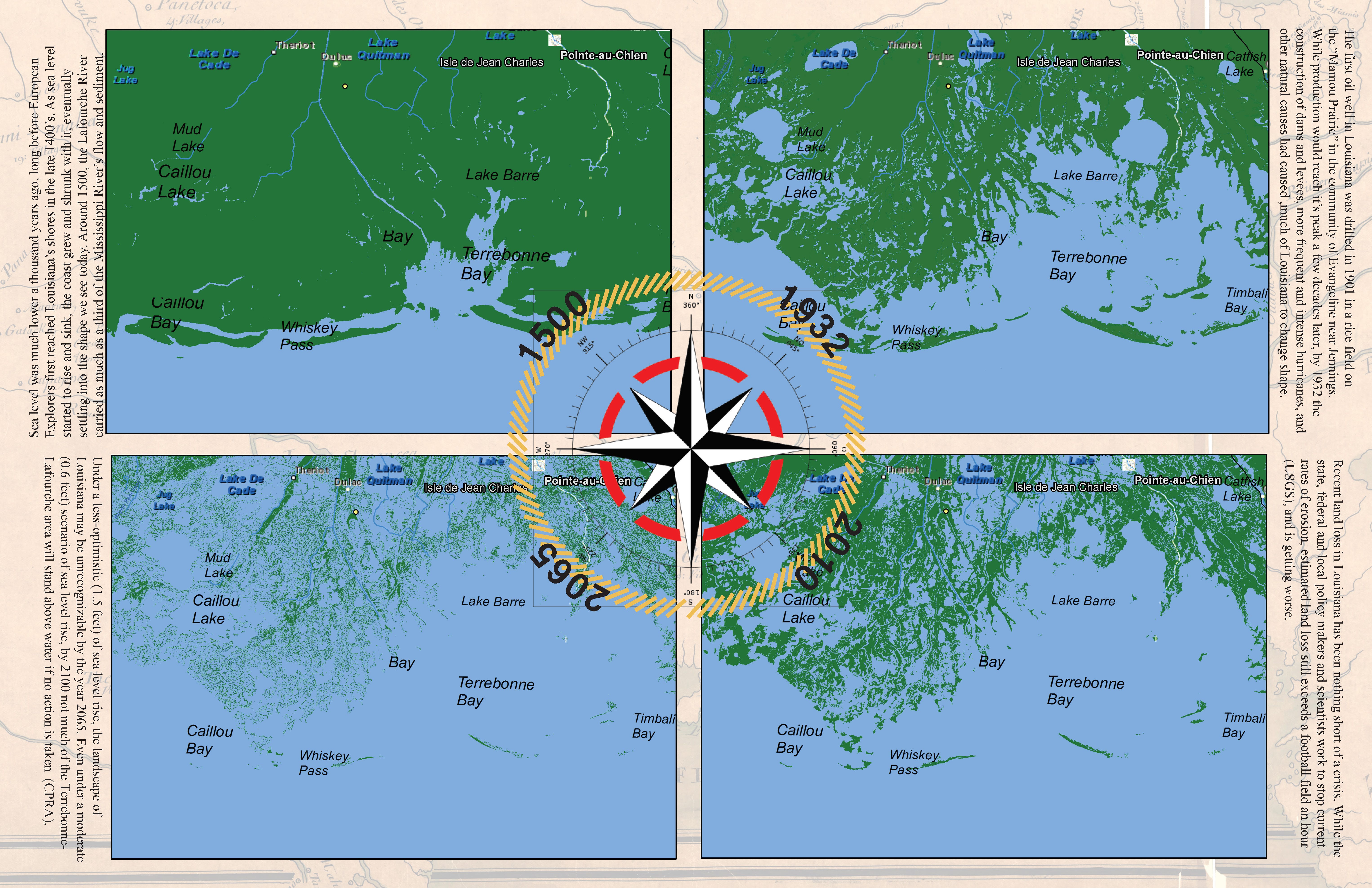
For generations, archaeologists and historians have treated Indigenous communities primarily as observers of environmental change. But my own research on Indigenous sites along the northern Gulf Coast has suggested a different perspective: Indigenous peoples were not simply witnesses to environmental catastrophe. They documented it through stories, migration patterns, settlement choices, burial practices, and the physical landscapes they constructed.
In many cases, those landscapes may contain records of extreme weather events that occurred centuries or even millennia before modern meteorological observations began.
Today, those records are disappearing.
The Stories the Land Remembers
Long before satellites and weather stations, Indigenous communities across North America developed sophisticated systems for observing and interpreting environmental change.
Researchers working with Indigenous communities in Australia, Canada, and the Pacific Islands have found that traditional ecological knowledge systems often preserve detailed observations about changing weather patterns, species behavior, sea levels, seasonal cycles, and environmental disruptions across generations.
These observations are not simply folklore. They represent long-term environmental datasets encoded in stories, practices, language, and lived experience.
In British Columbia, Indigenous elders have documented changes in species distributions, weather patterns, and ecosystem behavior occurring over their own lifetimes. Researchers there argue that Indigenous communities possess unique adaptive knowledge precisely because they have spent millennia living with environmental change.
The same is true along the Gulf Coast.
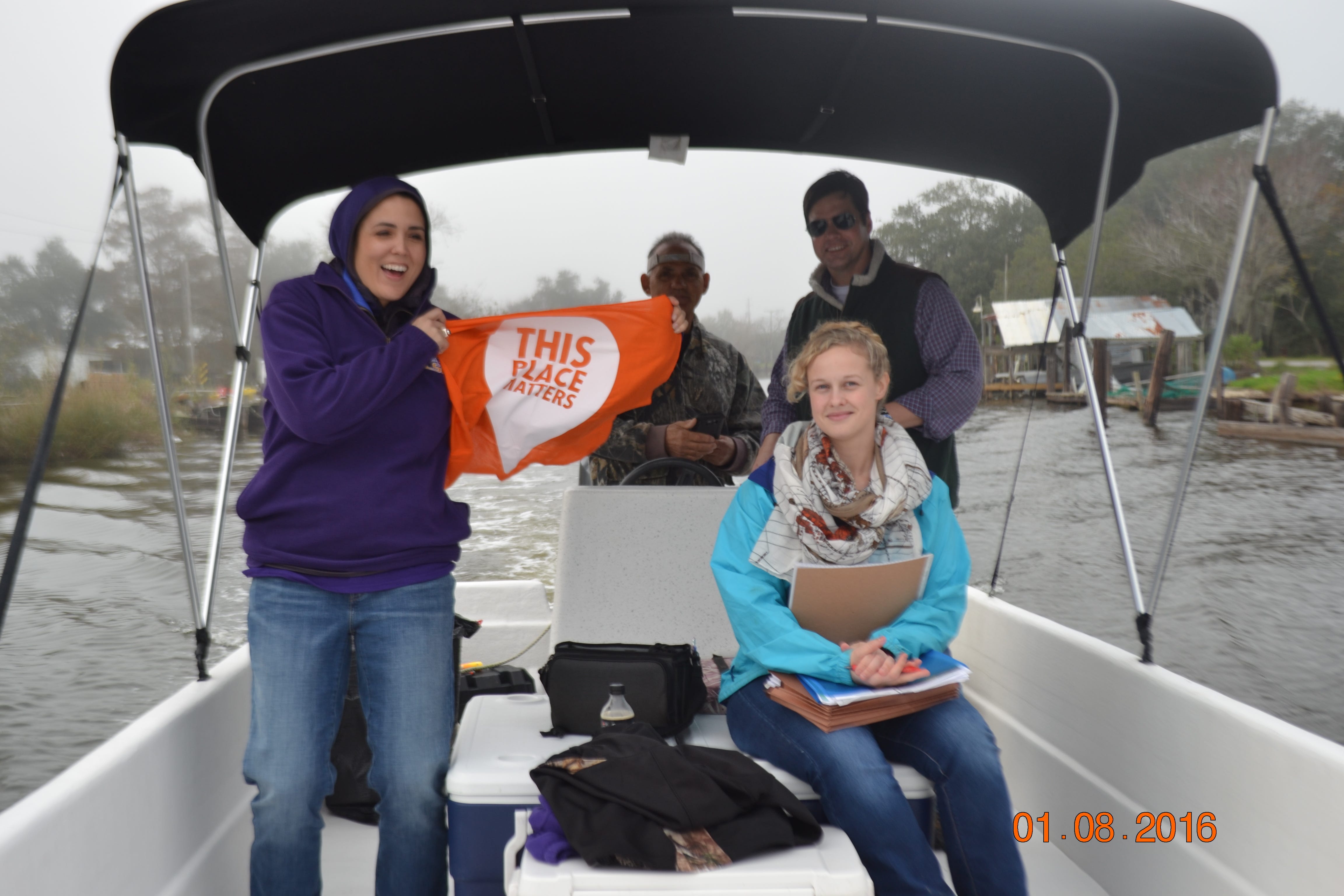
For the Houma, Point au Chien and Isle de Jean Charles people of south Louisiana, hurricanes are not historical anomalies. They are part of a collective memory passed from one generation to the next.
“Hurricane stories are an integral part of Houma folklore,” writes T. Mayheart Dardar, Vice Principal Chief of the United Houma Nation. “The tales of winds and water have been told and repeated over the generations.”
The Chenière Caminada hurricane of 1893. The storms of 1915 and 1926. Betsy. Camille. Katrina. Ida.
These storms are remembered not simply because they were destructive, but because surviving them required adaptation, migration, rebuilding, and the preservation of communal knowledge.
For centuries, the pattern was familiar: a storm would come, communities would rebuild, and life would continue.
Climate change is altering that equation.
When the Land Doesn’t Come Back
Dardar’s account of returning to his hometown after Hurricane Camille in 1969 is haunting.
“Houses were destroyed, tossed about like toys,” he wrote. “Trees were uprooted, cars flooded, boats scattered on the bank, and dead animals were hanging from trees.”
But his community returned.
The wetlands remained. The fisheries survived. The land endured.
Today, many Indigenous communities across coastal Louisiana face a fundamentally different reality.
The islands are shrinking.
The marshes are disappearing.
The cemeteries are flooding.
Sacred places and archaeological sites that survived hundreds or thousands of years of hurricanes are now disappearing beneath rising seas and accelerating erosion.
Many were never mapped.
Many were never excavated.
Some survive only in oral histories passed between generations.
Once these places disappear, they cannot be reconstructed.
Who Gets Remembered?
Climate Central’s reporting on Jamestown raises an uncomfortable but necessary question: in an era of climate change, what can we save?
Some places can be protected.
The Cape Hatteras Lighthouse was moved inland. Jamestown’s seawall has been reinforced. Archaeologists there are deploying sophisticated technologies to preserve as much of America’s colonial history as possible.
But many places cannot be relocated.
And some histories have never received the resources, recognition, or political attention required to preserve them.
The irony is difficult to ignore.
The United States is mobilizing to save the birthplace of colonization while many of the places preserving the histories of the people who lived here long before the nation’s founding are disappearing with comparatively little public attention.
Climate change is forcing us to confront a question far larger than sea walls or archaeological excavations.
It is forcing us to decide whose history matters enough to save.
Because along the Gulf Coast, the water is not only claiming land.
It is claiming memory.
And unlike Jamestown, many of these stories exist nowhere else.
If this story resonated with you, I hope you’ll consider becoming a paid subscriber.
At Mesoscale, I don’t just cover climate change as a future threat. I investigate how it intersects with history, democracy, public health, and the communities living through it right now. That means original reporting, archival research, interviews, scientific analysis, and, sometimes, revisiting research I’ve spent years pursuing to tell stories that larger outlets often miss.
As seas rise and storms intensify, we’re not only deciding what kind of future we want to build. We’re deciding what parts of our shared past are worth saving — and whose stories get remembered.
Your subscription helps make sure those stories continue to be told.


