

Thanks to your generous support, my recent training with the United Nations in Geneva gave me an opportunity to learn directly from the people working on the front lines of the climate crisis and bring those lessons back to you.
Mesoscale News is reader-supported, independent journalism. Your paid subscription helps me continue investigating the intersection of science, climate, public health, and political power, without corporate sponsors or political gatekeepers.
If you believe this work matters, please consider becoming a paid subscriber. Every subscription helps keep independent science reporting alive.
Last month, I traveled to Geneva, Switzerland, to participate in the United Nations Institute for Training and Research (UNITAR) Climate Change Study Programme.
For five days, I sat with scientists, economists, international policy experts, and professionals from around the world, learning from people working within the institutions responsible for confronting the greatest environmental crisis in human history.
We discussed the physics of a warming planet, the economics of adaptation, the legal obligations of governments, the human costs of disasters, and the enormous gap between what nations have promised and what they have delivered.
I came to Geneva as an environmental scientist who has spent much of my career working at the intersection of climate change, disaster response, and government accountability. I wasn’t expecting to learn that climate change is dangerous. I’ve spent years studying and documenting those dangers.
What interested me was something else: What happens to the science after scientists hand it to the people responsible for acting on it?
That question followed me from the World Meteorological Organization to discussions with representatives of the UN Framework Convention on Climate Change, the International Labour Organization, the UN Environment Programme, the UN Office for Disaster Risk Reduction, and other institutions.
Now, as representatives from around the world gather in Antalya, Türkiye, for COP31, the answer has never been more consequential.
The science is increasingly precise. The technology is improving. The economic case for action is overwhelming.
And the world is still moving dangerously slowly.
1. The climate crisis is no longer a projection of the future. It’s a measurement of right now.
Most of our sessions took place at the World Meteorological Organization, the Geneva-based institution that coordinates international meteorological observations and climate information.
For a geographer and climatologist, there was something extraordinary about being in a building so closely connected to the world’s climate monitoring infrastructure and the Intergovernmental Panel on Climate Change (IPCC).
Our first presentation focused on something fundamental to science: how we know what we know.
Climate observations come from multiple independent sources. Surface stations, ocean measurements, satellites, and historical records are assembled into datasets that allow scientists to reconstruct how Earth’s climate has changed.
Those independent datasets converge on the same conclusion: Earth is warming rapidly.
Bringing the point home, WMO released its 2026 State of the Climate update on the heels of our progam.
The findings were staggering.
The global average temperature from January through September 2026 was approximately 1.47°C above the preindustrial average. The past 12 years are expected to be the 12 warmest on record.
Ocean heat and global mean sea level have reached record highs. A strengthening El Niño threatens to intensify extreme heat, drought, and heavy rainfall into 2027.
These aren’t speculative projections. They are observations of a planet already undergoing profound physical changes.
And they are unfolding against an increasingly troubling political backdrop.
The UN Environment Programme’s 2026 Emissions Gap Report estimates that existing government policies put the world on a trajectory toward approximately 2.8°C of warming this century.
Even if countries fully implement their current national climate commitments, projected warming remains around 2.6°C.
The difference between 1.5°C and 2.8°C is not a minor adjustment to the thermostat. It means substantially greater risks to human health, food production, ecosystems, water supplies, and the habitability of entire regions.
It means mass displacement, migration, disease, disasters and death.
The question is no longer whether we have enough evidence to act.
It’s why the evidence has failed to produce an adequate response.
2. Disasters aren’t simply natural. Vulnerability is built into them.
With the UN Office for Disaster Risk Reduction, our discussions turned to one of the most important distinctions in disaster science.
A hazard is not the same thing as a disaster.
A hurricane can pass over two communities with nearly identical winds and rainfall, yet produce radically different outcomes. Hurricane Katrina illustrated that point in stark contrast.
The difference often lies in exposure and vulnerability: where people live, the infrastructure protecting them, their access to healthcare and transportation, the reliability of warning systems, and the resources available for evacuation and recovery.
This is central to the Sendai Framework for Disaster Risk Reduction, the international agreement guiding efforts to prevent and reduce disaster losses.
UNDRR representatives explained why climate adaptation cannot focus exclusively on changes in the physical hazard.
We must also change the social, economic, and political conditions that turn hazardous events into human catastrophes.
That distinction matters enormously in the United States.
When a hurricane strikes a wealthy coastal neighborhood, homeowners may have insurance, reliable transportation, and the financial means to relocate.
A low-income family living in a flood-prone rental property may have none of those protections.
The storm is the same. The disaster isn’t.
The same principle applies internationally.
Countries already burdened by poverty, inadequate infrastructure, political instability, or debt often have the fewest resources to protect themselves against climate impacts, despite contributing comparatively little to the emissions responsible for warming.
And disasters can create vicious cycles. Infrastructure is destroyed, government revenues decline, reconstruction costs rise, and resources that could have been invested in prevention are diverted into recovery.
In Geneva, the message was clear: disaster risk reduction must be built into development decisions before catastrophe strikes.
A disaster is not just a test of the weather. It is a test of the systems we built before the weather arrived.
3. Climate finance: The countries least responsible are paying the highest price.
If one subject connected nearly every discussion in Geneva, it was money.
Climate action requires enormous investments in clean energy, resilient infrastructure, water systems, public health, agriculture, and disaster preparedness.
But the central problem is not simply the total amount of money available.
It is who controls it, who receives it, and under what conditions.
In our climate finance sessions, representatives discussed the responsibilities of governments, development banks, commercial financial institutions, and international funding mechanisms.
The discussions repeatedly returned to countries that face enormous climate risks while struggling with debt and limited institutional capacity.
A developing country may need financing to protect its coastline, strengthen its electric grid, or build an early-warning system.
But if that funding arrives primarily as loans, the country may be forced to assume additional debt to protect itself against damage caused disproportionately by emissions from wealthier nations.
The injustice is difficult to overstate.
And the latest numbers make it impossible to ignore.
According to UNEP’s 2026 Adaptation Gap Report, international public adaptation finance to developing countries reached approximately $28.2 to $31.7 billion in 2024.
Estimated adaptation needs, meanwhile, are approximately $305 billion annually by 2035.
Even tripling international public adaptation finance would meet only about 20–29% of projected needs.
At COP31, this is not merely an academic discussion.
On November 13, UN climate chief Simon Stiell warned that developing countries are being trapped in a cycle of debt, disasters, and increasingly expensive borrowing.
He called for financing that strengthens national institutions, reduces barriers to accessing funds, and recognizes that grants and highly concessional financing remain essential for vulnerable countries.
This closely echoes what we discussed in Geneva.
Climate finance cannot be judged solely by how much money wealthy nations announce at international conferences.
It must also be judged by how much reaches the communities that need it, how quickly it arrives, and whether it leaves those communities better equipped to withstand the next disaster.
Financing climate adaptation by deepening the debts of climate-vulnerable countries is not a sustainable solution.
It is another way of transferring the costs of the crisis to those least responsible for creating it.
4. Climate change is a human rights crisis.
One of the most consequential sessions I attended was led by a representative of the Office of the United Nations High Commissioner for Human Rights.
The central argument was straightforward: climate change is not merely an environmental problem.
It is a human rights problem.
The consequences of climate change threaten access to clean water, adequate food, housing, healthcare, livelihoods, and, in extreme circumstances, life itself.
A human rights-based approach therefore changes how climate policies should be evaluated.
It isn’t enough for a government to announce an emissions reduction target.
We must also ask whether the policy protects vulnerable communities, respects Indigenous rights, includes affected populations in decision-making, and provides meaningful accountability.
The session also examined the risks of climate policies that reproduce existing inequalities.
A renewable energy project, for example, may reduce greenhouse gas emissions while displacing communities or violating land rights.
A carbon market may produce accounting credits without delivering meaningful benefits to the people living where the project operates.
A government may celebrate a climate finance commitment while the communities most exposed to flooding, drought, or extreme heat remain unable to access assistance.
The human rights discussion challenged us to consider not only whether climate action works, but for whom it works.
This is especially relevant as countries negotiate the next stages of implementing the Paris Agreement.
Human rights cannot be an optional consideration added after a climate policy has already been designed.
They must be part of the design itself.
5. The green transition cannot leave workers behind.
With guests from the International Labour Organization, our discussion focused on a deceptively simple question:
What happens to workers when the economy changes?
A transition away from fossil fuels will reshape employment across energy, transportation, manufacturing, agriculture, construction, and other industries.
Some jobs will disappear. Others will emerge. Many will require new skills.
A successful transition cannot be measured exclusively by the number of solar panels installed or coal plants retired.
We must also account for wages, working conditions, social protections, retraining opportunities, and the economic security of communities whose livelihoods depend on industries undergoing transformation.
The ILO describes this as a just transition.
Its 2026 COP31 briefing estimates that at least 2.4 billion workers worldwide are exposed to excessive heat.
By 2030, heat stress could eliminate the equivalent of 80 million full-time jobs.
At the same time, renewable energy already supported approximately 16.6 million jobs globally in 2025.
Those figures reveal two sides of the same transformation.
Climate change is already damaging workers’ health and productivity. Climate action, meanwhile, can generate new employment and economic opportunities.
But neither outcome is distributed equally.
Without deliberate policies, the benefits of new industries may accumulate among investors and highly skilled workers while vulnerable communities bear the costs of transition.
The ILO’s framework emphasizes worker participation, social dialogue, collective bargaining, skills development, and decent work.
The lesson is particularly important in countries where climate policy is routinely framed as a choice between protecting jobs and protecting the environment.
That is a false choice.
The real challenge is designing policies that protect both workers and the planet.
6. Water connects nearly every dimension of the climate crisis.
With guests from UN-Water, we examined the climate crisis through a resource so fundamental that nearly every human activity depends on it:
Water.
Climate change is altering when precipitation falls, how intensely it falls, where water is stored, and how reliably communities can access it.
Some regions face increasingly severe droughts. Others experience destructive flooding. Many experience both.
Glaciers and mountain snowpack, which provide seasonal freshwater supplies to millions of people, are changing rapidly.
Rising seas threaten coastal aquifers with saltwater intrusion.
And extreme weather can overwhelm water treatment systems, damage sanitation infrastructure, and increase exposure to waterborne disease.
One example discussed in Geneva involved the recent destructive flooding caused by glacial melt in the Himalayan mountains, causing more than 1,000 deaths in Nepal and Tibet. I wrote about that here.
The broader lesson was that climate impacts do not respect the boundaries we draw between sectors or political jurisdictions.
A mountain glacier affects a river. A river affects a reservoir. A reservoir affects agriculture, electricity generation, drinking water, and public health.
The people making decisions about each of those systems may work in entirely different institutions.
This is one reason UN-Water exists as a coordination mechanism across the UN system.
And it is why water security must become central to climate adaptation rather than treated as a secondary environmental issue.
At COP31, UNEP has highlighted the Baku Dialogue on Water for Climate Action, an international initiative connecting climate policy, finance, and water management.
The challenge is no longer simply understanding the hydrological consequences of climate change — it is ensuring that water governance, infrastructure investment, and climate policy respond to those consequences together.
7. Technology can help solve the crisis. It can also make it worse.
One of the more interesting sessions during the week examined the growing role of digital technology and artificial intelligence in climate action.
Digital systems can improve weather forecasting, support early warnings, optimize energy networks, monitor environmental changes, and strengthen disaster response.
Satellite observations and advanced computational models have already transformed our ability to understand the Earth system.
But technology is not environmentally neutral.
Data centers consume electricity and water. Manufacturing electronics requires minerals, energy, and industrial infrastructure. Digital devices generate growing quantities of electronic waste.
Artificial intelligence adds another layer of complexity.
Its computational demands can create new pressures on energy and water systems even as its applications promise greater efficiency elsewhere.
This tension should be central to how governments evaluate emerging technologies.
A technology that improves efficiency in one sector may still create substantial environmental costs through its infrastructure, supply chains, or rapid expansion.
The relevant question is not whether AI is inherently good or bad for the climate.
It is whether particular applications deliver measurable environmental and social benefits that outweigh their full lifecycle costs.
The same principle applies to corporate sustainability claims.
In our sessions on environmental, social, and governance reporting, we examined how companies disclose their environmental performance, and how those disclosures can obscure as much as they reveal.
A corporation may publish an attractive sustainability report while its core business model continues to depend on environmentally destructive practices.
Transparency is essential, but disclosure is not the same thing as accountability.
And neither is a substitute for measurable emissions reductions.
8. Climate change is part of a larger planetary crisis.
One of the most important ideas presented by UNEP was that climate change cannot be separated from biodiversity loss and pollution.
Together, these form what the UN calls the triple planetary crisis.
Deforestation contributes to climate change while destroying habitats and weakening ecosystems that store carbon and regulate water.
Pollution damages human health and biodiversity while imposing enormous economic costs.
Resource extraction can accelerate environmental degradation even when the resulting materials are used in technologies intended to reduce emissions.
This is why climate solutions must be evaluated as parts of larger systems.
Replacing fossil fuels with renewable energy is essential. But an energy transition that ignores destructive mining practices, resource consumption, labor exploitation, and ecological damage risks reproducing other dimensions of the crisis.
The discussions on circular economies, sustainable procurement, and systems thinking emphasized reducing waste, improving resource efficiency, and designing economic activity around ecological limits.
The ultimate goal is not simply to preserve today’s patterns of consumption while changing the technologies that power them — it is to build economies capable of supporting human well-being without continually degrading the natural systems on which that well-being depends.
9. International climate agreements are only as powerful as their implementation.
During the UNFCCC session, we examined the architecture of international climate governance.
The 1992 Framework Convention established the foundation for global cooperation.
The 1997 Kyoto Protocol introduced binding emissions targets for certain developed countries.
The 2016 Paris Agreement created a broader framework in which countries submit and periodically strengthen their national climate commitments.
One principle runs throughout these agreements: common but differentiated responsibilities and respective capabilities.
In practical terms, countries share responsibility for confronting climate change, but they have not contributed equally to the problem and do not possess equal resources to address it.
This principle is fundamental to international climate negotiations.
It is also a source of persistent political conflict.
Countries disagree over how much they should reduce emissions, who should pay for adaptation, how historical responsibility should influence present obligations, and what mechanisms should exist to ensure accountability.
Meanwhile, the atmosphere continues accumulating greenhouse gases.
The latest UNEP Emissions Gap Report makes the implementation problem painfully clear.
Even full implementation of existing national commitments would leave the world on a dangerous warming trajectory.
At COP31, negotiators are debating how to strengthen mitigation, adaptation, financing, and the mechanisms used to evaluate progress.
But agreements alone do not cool the planet.
Emissions reductions do.
And the distance between diplomatic promises and physical outcomes is where the future of climate policy will be decided.
10. The biggest lesson from Geneva: We know far more than we are willing to do.
One of the questions posed to us during the programme was what we intended to do with the knowledge we gained.
It is a question that deserves to be asked of governments, corporations, and international institutions as well.
What happens after the conference ends?
After the speeches, presentations, negotiations, and photographs?
After the next set of commitments is announced?
I left Geneva with a deeper appreciation for the extraordinary expertise distributed throughout the UN system.
Scientists are monitoring changes in the Earth system with remarkable precision.
Disaster specialists understand how to reduce exposure and vulnerability.
Economists are developing mechanisms to finance resilience.
Human rights experts are identifying legal responsibilities.
Labor specialists are designing frameworks for equitable transitions.
Engineers and technology experts are developing practical tools for reducing emissions and protecting communities.
None of these disciplines can solve the crisis alone.
That was perhaps the most consistent lesson across the programme.
Climate change is not simply a problem of atmospheric chemistry. It is a problem of energy, economics, governance, public health, human rights, infrastructure, and political power.
The challenge is not a shortage of knowledge, but rather the failure to translate that knowledge into coordinated, adequately financed, enforceable action.
As COP31 continues in Türkiye, governments have another opportunity to narrow the distance between what they know and what they do.
But the atmosphere does not negotiate. The oceans do not recognize political boundaries. And communities facing deadly heat, rising seas, and destructive storms cannot wait for another decade of incremental promises.
The people I met in Geneva are working on different parts of an extraordinarily complex problem.
Their work matters.
But the ultimate measure of success will not be how many conferences are held, how many reports are published, or how many commitments are announced.
It will be whether emissions fall, whether ecosystems recover, whether vulnerable communities become safer, and whether governments finally accept responsibility for the future their decisions are creating.
We already have the warning. We already have much of the knowledge. And we already have many of the tools.
What remains is the choice to use them.
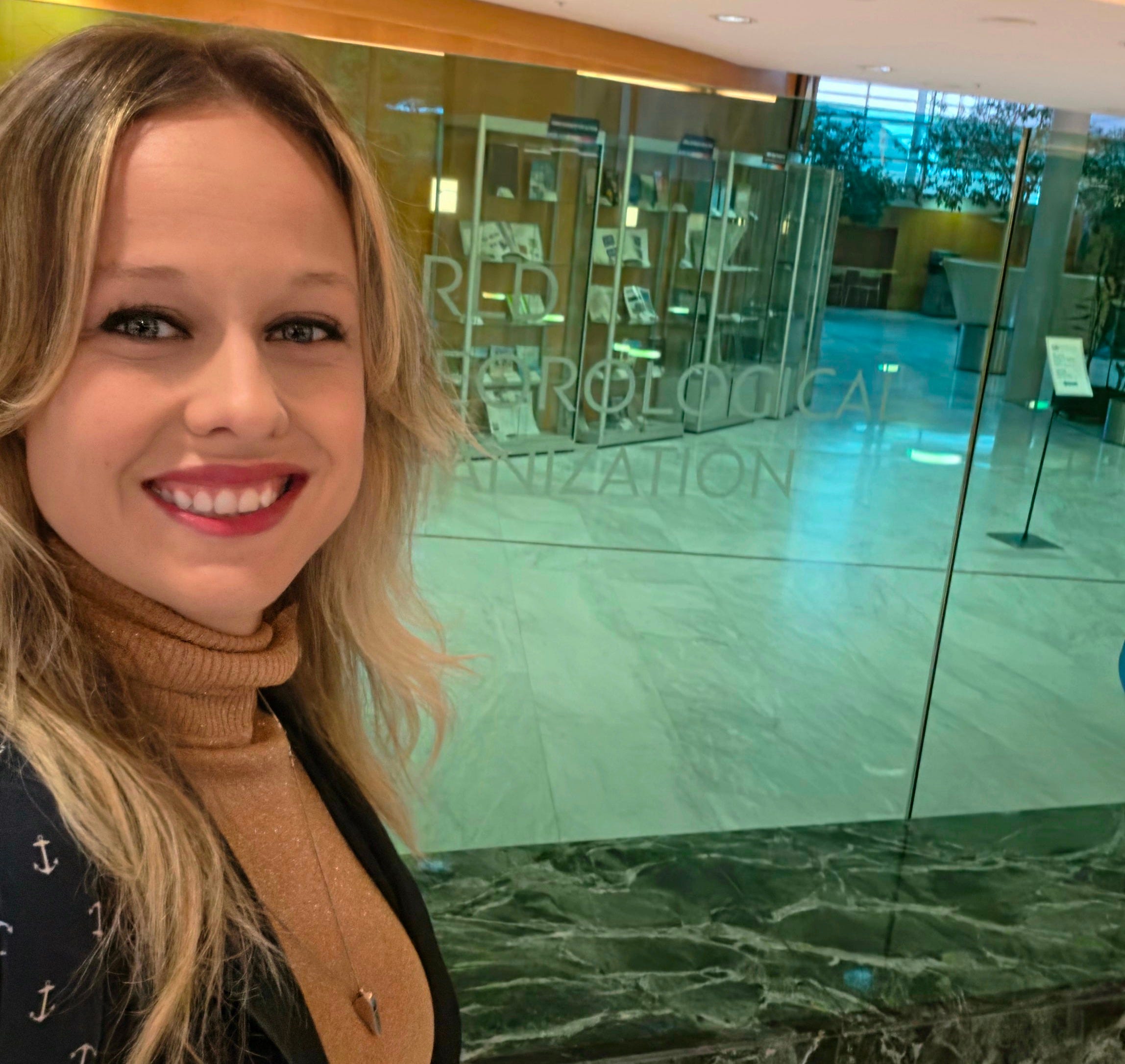
Before I close, I want to say something to everyone who helped me get to Geneva.
Thank you. From the bottom of my heart.
When I asked for help making this trip possible, I knew it was a lot to ask. International travel, programme fees, and the costs of being away from home add up quickly, especially when you’re trying to make a living as an independent investigator.
But you showed up for me.
Some of you donated what you could. Others shared my fundraiser, sent encouraging messages, or simply reminded me that people still believe in the work I’m trying to do.
Because of you, I got to spend a week learning from some of the world’s leading experts on climate change, sitting in rooms I had dreamed of being in, asking questions, and connecting with people who have dedicated their careers to protecting our planet.
After everything I’ve been through in my career, having people believe in me enough to help make an opportunity like this possible means more than I can adequately express.
You didn’t just help pay for a trip. You helped me keep moving forward in the work I’ve devoted my life to.
And I hope this article is just the beginning of what I can give back to you from that experience.
Mesoscale News is how I continue that work independently, without corporate sponsors or political gatekeepers. Every paid subscription helps me investigate the stories that matter, follow the science wherever it leads, and pursue opportunities for reporting and learning that would otherwise be out of reach.
If you value what I’m building here, please consider becoming a paid subscriber. And if you’ve already subscribed, donated, or shared my work, please know how deeply grateful I am.
I wouldn’t have made it to Geneva without you. And I don’t want you to ever forget that you were part of making it happen.
With love and gratitude,
Rebekah
Science. Data. Democracy.