

Global Disaster Briefs are your semi-regular summaries and headlines from around the world about natural and man-made disasters, climate change, disease and health, and international conflict.
Please join me LIVE tomorrow (Tuesday, Nov. 24, 2026) on The Barometer Report for a special episode about Climate and El Nino. Episode starts at 8 AM EST.
Click here to join or bookmark tomorrow’s show!
Meteorological/Climatological
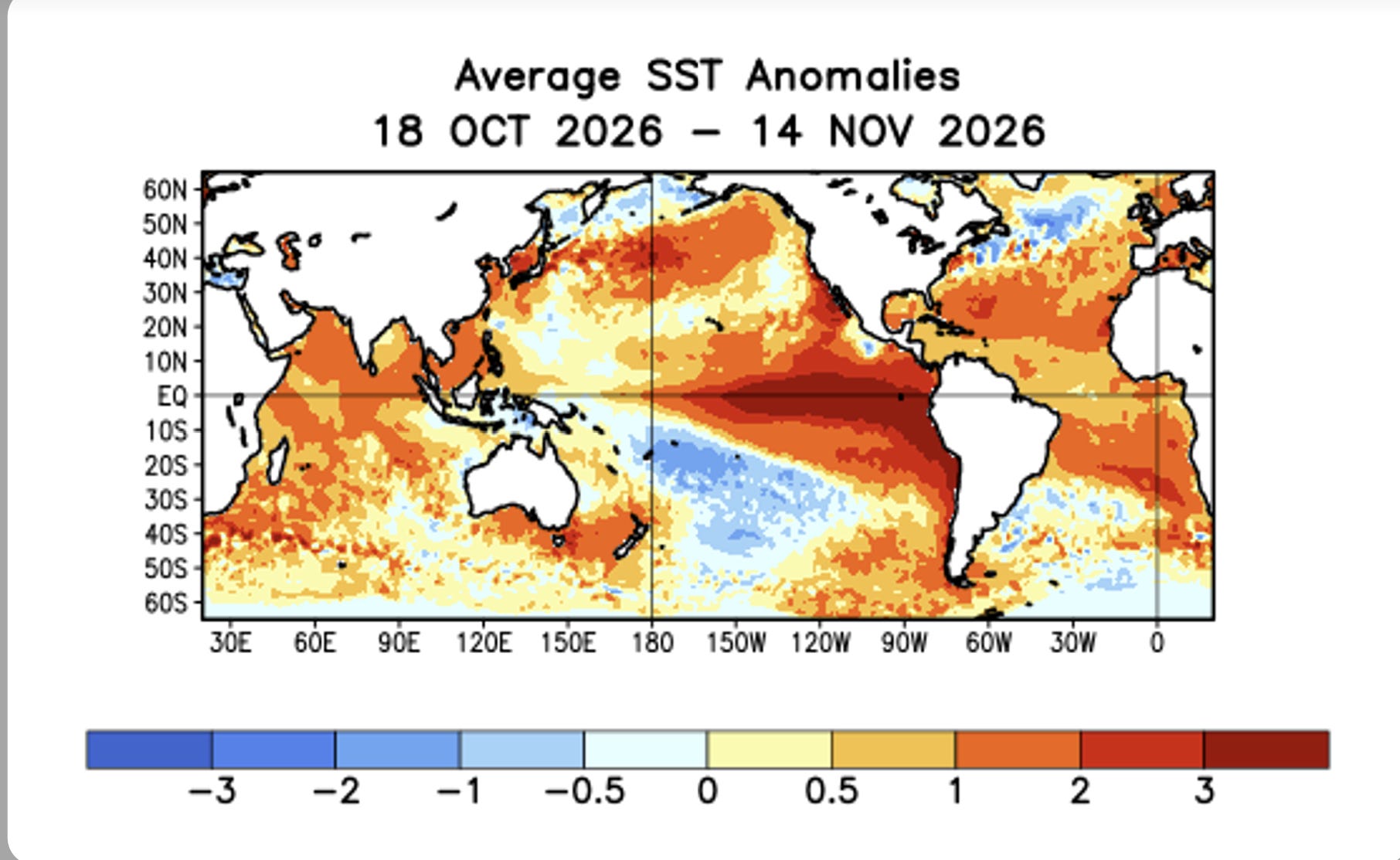
The World Meteorological Organization (WMO) expects the current El Niño to reach record-breaking strength by December, with impacts on global weather extending well into 2027.
The WMO’s State of the Climate Update, released November 9, documented several alarming trends in the global climate system:
The last 12 years (2015–2026) are expected to be the 12 warmest years on record.
Global temperatures averaged approximately 1.47°C above preindustrial levels between January and September 2026.
Global mean sea level reached its highest point since satellite monitoring began in 1993.
Preliminary ocean heat content data indicate a tenth consecutive year of record ocean heat.
The current El Niño will compound many of the most catastrophic impacts of anthropogenic climate change, including extreme heat, drought, flooding and disruptions to global agricultural production.
Reductions in maize production in Central America, anchovy fisheries in Peru, and rice and sugarcane production in Asia have already been reported.
Approximately 90 million of the world’s 117 million forcibly-displaced people live in countries vulnerable to extreme weather, making the current El Niño a humanitarian concern of extraordinary proportions.
I’ll be discussing this in detail during tomorrow’s Barometer Report, starting live at 8 AM EST.
The United Nations’ annual climate change conference concluded Sunday, November 22, following two additional days of negotiations, without consensus on an overarching agreement.
Disagreements over language addressing fossil fuels and commitments to climate adaptation financing contributed to the collapse of negotiations.
UN Secretary-General António Guterres expressed disappointment in the outcome Sunday, reiterating calls for stronger action on fossil fuels and financial support for countries disproportionately affected by climate change.
Developing countries require approximately $300 billion annually in adaptation financing. In 2024, those countries received only about $36 billion in combined public and private adaptation financing.
The failure to adequately finance climate adaptation comes at a particularly dangerous time for countries facing the most severe impacts of the current El Niño.
I’ll be discussing this in detail during tomorrow’s Barometer Report, starting live at 8 AM EST.
Southeast Asia
The ASEAN Coordinating Centre for Humanitarian Assistance on Disaster Management (AHA Centre) reported 30 disasters across Southeast Asia between November 16 and 22, including flooding, landslides and severe winds.
Indonesia: Flooding that began November 19 in West Kalimantan has affected approximately 28,900 people and 11,100 homes across seven districts. Additional flooding was reported throughout Sumatra.
Malaysia: Authorities reported flooding and landslides across five states, including Selangor, Perak, Pahang, Negeri Sembilan and Melaka.
Thailand: Flooding was reported in the southern province of Phatthalung as the region enters its northeast monsoon season.
United States
California: Potentially record-breaking tides are expected in California this week. With the combined forces of warm waters caused by record-breaking El Niño, an extra-high “king tide,” and waves generated by a storm in the Gulf of Alaska, coastal inundation of 1-3 feet is expected for most of the California coastline.
Florida: The National Weather Service issued a flood warning today for the St. Johns River near Cocoa, Florida, forecasting major flooding and record river levels. Record-breaking rainfall in the state caused widespread flooding last week.
Europe
European meteorological agencies issued orange-level severe weather warnings Sunday and Monday for parts of France, Spain, North Macedonia, Finland and Sweden. Hazards include heavy rainfall, coastal flooding, dangerous marine conditions, strong winds and blowing snow.
Geological
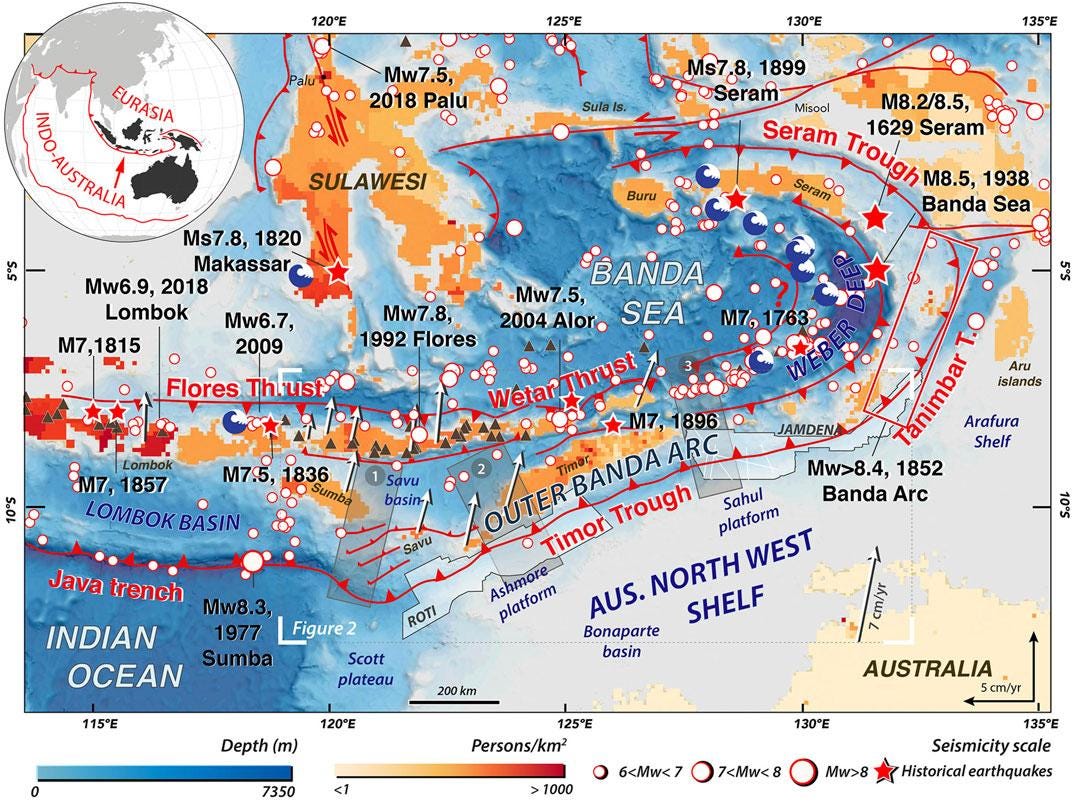
Indonesia/Timor-Leste: A magnitude 7.2 earthquake struck the Banda Sea Saturday, November 21, at a depth of approximately 125 km, according to Indonesian authorities.
Shaking was reported across Indonesia’s Maluku and Tanimbar islands and in Dili, the capital of Timor-Leste.
Vanuatu: A magnitude 6.5 earthquake struck the Vanuatu Islands region today, November 23, at a depth of approximately 600 km. No tsunami warning was issued, and no casualties were immediately reported.
China: A magnitude 5.9 earthquake struck China Saturday, November 21, at a depth of approximately 10 km.
Southern Ocean: A magnitude 5.5 earthquake was recorded west of Macquarie Island this morning.
International Conflict
Cuba
Cuba continues to experience severe shortages of electricity, fuel, food, drinking water and medical supplies because of U.S. restrictions on oil imports imposed in January 2026.
The country experienced its seventh nationwide blackout of the year on September 18, affecting approximately 9.4 million people. Insufficient fuel supplies and deteriorating electrical infrastructure have compromised hospital operations, water treatment and distribution, food refrigeration and waste collection, increasing the risk of infectious disease outbreaks.
Democratic Republic of Congo
More than 320,000 people were displaced from South Kivu in a single week earlier this month, according to the United Nations. More than seven million people remain displaced across the DRC despite international efforts to negotiate an end to the conflict.
Rwanda-backed M23 forces continue to occupy significant portions of eastern Congo following their capture of Goma and Bukavu in early 2025.
Human rights violations increased 41% from August to September, a November 18 UN monthly report stated.
World Health Organization Director-General Dr. Tedros Adhanom Ghebreyesus warned Sunday, November 22, that fighting near a hospital in Ituri province had forced health care and humanitarian workers to shelter inside a maternity ward for more than 24 hours, disrupting efforts to contain the country's Ebola epidemic.
The outbreak, caused by the Bundibugyo virus, was officially declared May 15 and remains uncontrolled six months later. The WHO warned that increasing violence across eastern Congo since late October has severely compromised containment efforts.
Iran
A missile launched by the US struck the outskirts of Qeshm Island on November 20 in another act of aggression against the country.
Iran's Foreign Ministry announced Monday, November 23, that it would use all available means to confront the ongoing U.S. naval blockade. Iranian crude oil exports have fallen to nearly zero since the United States reinstated its blockade on July 14 following the collapse of negotiations. Iran maintains that it will reopen the Strait of Hormuz once the United States ends hostilities, lifts the blockade and provides sanctions relief.
As a result of American and Israeli aggression, the people of Iran have been pushed further into destitution. Iran began rationing electricity Sunday, November 22, with outages expected to last up to two hours per day. Iranian President Masoud Pezeshkian warned that American and Israeli attacks on the country's energy infrastructure, particularly its natural gas facilities, have compromised Iran's ability to meet energy demands heading into winter.
Authorities also introduced measures last week to manage bread shortages. After six consecutive years of drought, the five reservoirs supplying drinking water to Tehran remain approximately 80% empty despite recent rainfall. American and Israeli military attacks on water infrastructure earlier this year have compounded a water crisis driven by prolonged drought, unsustainable groundwater extraction and rising temperatures.
Libya
Ukrainian naval drones sank the Russian warship Merkury at the port of Benghazi, Sunday, November 22. A second attack targeted a cargo vessel allegedly used to transport Russian weapons. Ukrainian President Volodymyr Zelenskyy claimed responsibility for both attacks Monday. The United Nations Support Mission in Libya called for an independent investigation, warning against military operations that could draw Libya into the Russian-Ukrainian war.
Russia's military involvement in Libya has undermined the country's political reunification, prolonged instability and, in documented instances, violated the UN arms embargo imposed in 2011 after a US-led coup against Libyan leader Muammar Gaddafi.
The UN Security Council has repeatedly demanded the withdrawal of foreign military forces, fighters and mercenaries from Libya. On April 14, 2026, the Security Council unanimously adopted Resolution 2819, extending sanctions against Libya through August 2027.
Palestine
Gaza
An Israeli airstrike on the Nasser Medical Complex in Khan Younis killed six people and damaged surgical facilities, according to a United Nations humanitarian situation report published November 20.
The attack further compromises Gaza’s ability to provide medical care as the population enters its fourth winter since October 2023. Israel has violated the terms of the October 2025 ceasefire agreement 5,989 times
Humanitarian organizations have also warned of parasite infestations affecting livestock, with implications for human health, food security and environmental health. Restrictions on the entry of veterinary supplies continue to complicate prevention and treatment efforts.
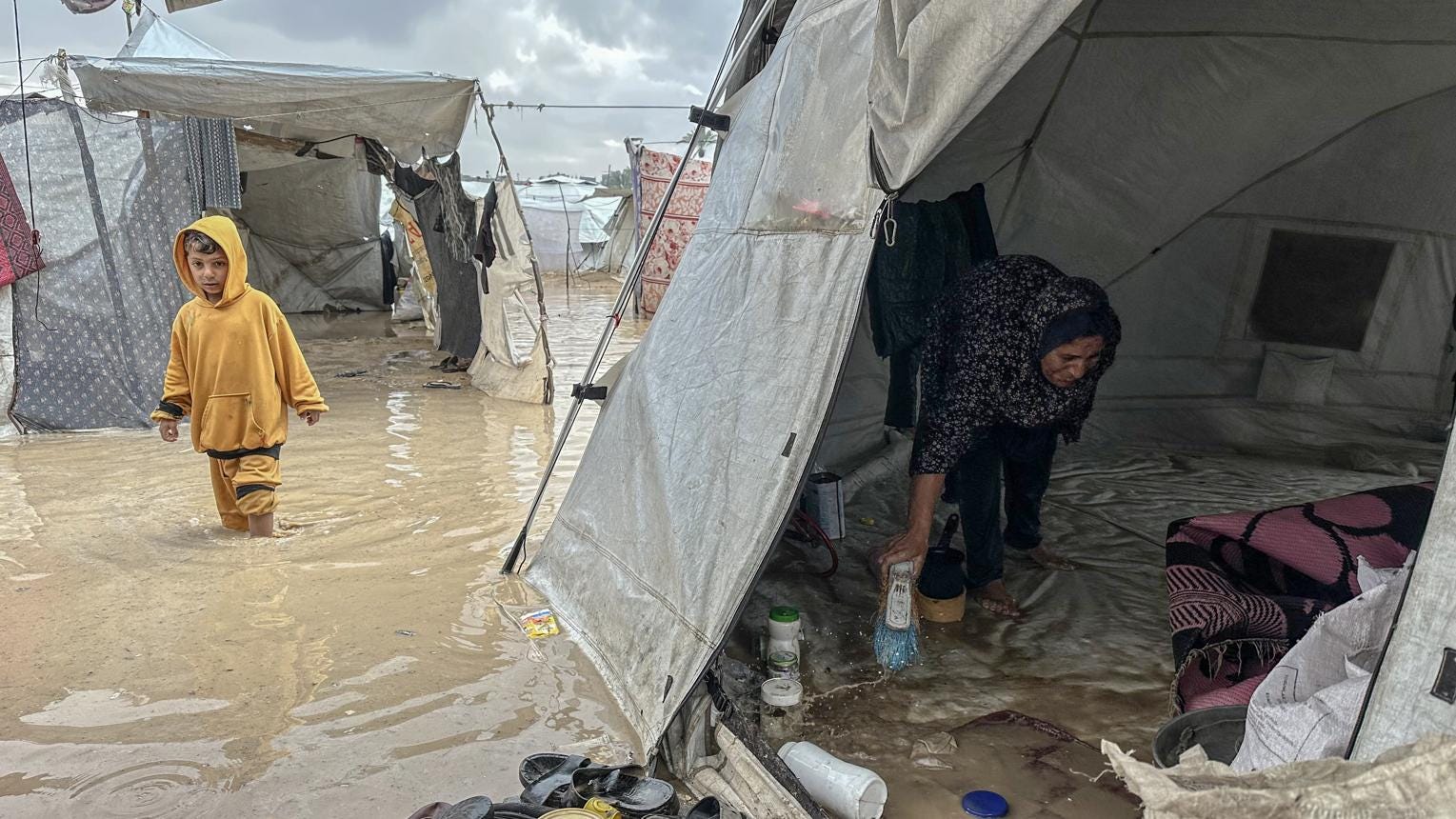
Heavy rains earlier this month damaged thousands of shelters across Gaza, where displaced Palestinians continue to live in makeshift tents and damaged buildings.
The United Nations reported that the rains damaged facilities providing essential services, exacerbating a humanitarian crisis already characterized by restrictions on the entry of supplies, widespread destruction and continuing Israeli military attacks.
Thirty-eight Palestinian fatalities were recorded between November 10 and 16, according to Gaza’s Ministry of Health. That figure includes newly killed Palestinians, people who succumbed to earlier injuries and bodies recovered from rubble.
The current El Niño presents an additional concern for Gaza. Any increase in the frequency or intensity of precipitation could worsen flooding in displacement camps, particularly in areas where Israel has destroyed drainage, sewage and sanitation infrastructure. Regional forecasts will be critical in assessing that risk.
West Bank
A 72-year-old Palestinian woman was shot and killed by an Israeli settler in Jericho, according to the United Nations’ most recent humanitarian situation report.
The UN documented 40 attacks by Israeli settlers resulting in injuries, deaths or property damage across 30 Palestinian communities in a single week.
Sixty-eight Palestinians, including 31 children, were displaced as a result of settler violence and associated restrictions in the Hebron and Ramallah governorates.
More than 5,150 Palestinians have been forcibly displaced across the West Bank since the beginning of 2026 through a combination of demolitions, evictions, settler violence and restrictions on access to their land and homes.
An average of more than 16 Palestinians have been displaced every day this year.
The Sahel
The Global Centre for the Responsibility to Protect warned November 16 that escalating violence across the Central Sahel continues to expose civilian populations to atrocities potentially constituting war crimes and crimes against humanity.
Disruptions to transportation networks, agricultural production and humanitarian operations threaten to further exacerbate food insecurity in a region already disproportionately vulnerable to extreme heat, drought and flooding.
The Armed Conflict Location & Event Data project (ACLED) reported the following developments during November 7–13:
Mali: JNIM and the Azawad Liberation Front (FLA) intensified military operations in northwestern Mali. JNIM also targeted civilian populations in southern and western Mali and traditional Dozo militias in central Mali.
Burkina Faso: JNIM intensified attacks against government forces, major population centers and transportation routes, including deploying improvised explosive devices along National Route 24.
Niger: Islamic State militants carried out attacks in the Dioundiou and Téra departments, while a JNIM attack in Kirtachi displaced thousands of residents.
Sudan
The United Nations and the United States have condemned drone attacks in Khartoum as Sudan’s civil war continues. Sudanese authorities have renewed allegations that attacks were launched from neighboring Ethiopia.
The conflict’s impacts on agricultural production, population displacement, food distribution and public health infrastructure leave Sudan particularly vulnerable to additional climate-related disasters.
El Niño-related changes in rainfall across East Africa, which vary substantially by geography and season, threaten to further complicate humanitarian operations in the region.
South Sudan
The United Nations Mission in South Sudan (UNMISS) warned November 10 that the country remains inadequately prepared for its first national elections since gaining independence in 2011, currently scheduled for December 22. Key provisions of the country’s peace agreement remain unimplemented, and intercommunal violence continues to threaten civilians.
Approximately 10 million people require humanitarian assistance, while restrictions on humanitarian access have increased by 38% over the past year.
In a separate report published November 20, the United Nations documented worsening drought conditions in Eastern Equatoria and flooding in Upper Nile, both of which have compromised agricultural production and exacerbated food insecurity.
Yemen
Yemen’s civil war has reignited following the expansion of the U.S.-Iran war into the region, with Iranian-aligned Houthi forces making significant territorial gains against Yemen’s internationally recognized government.
The Houthis have gained control over the Bab el-Mandeb Strait, a critical international shipping corridor connecting the Red Sea and the Gulf of Aden, and continue to threaten the cities of Taiz and Aden.
A UNICEF report published last week documented at least 64 children killed and another 64 injured since September 3. More than 800,000 people in Taiz were reportedly cut off from humanitarian assistance as of October 23. Water production in the city has decreased by nearly 50%, while food and fuel prices have more than doubled.
UNICEF requires an additional $8.5 million to provide emergency assistance to 560,000 people affected or displaced by the renewed fighting
Please join me LIVE tomorrow (Tuesday, Nov. 24, 2026) on The Barometer Report for a special episode about Climate, COP31, and El Nino. Episode starts at 8 AM EST.